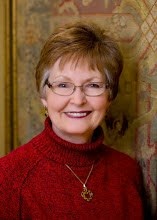
I was in graduate school and slightly in love. Well, maybe a lot in love. But I kept to the high school maxim: "Never let him see you in curlers with no makeup." Supposedly, if you revealed your true self (or face), your true love would high-tail it to the woods and never be seen again.
So with hair perfectly coiffed and a carefully chosen outfit, I met my date in the front lobby of the dorm (yes, a dorm), and we headed out to his church van full of teenagers from his part-time pastorate. The plan was to take them to eat at a fast-food place and then head downtown to a statewide youth evangelist event.
At the burger place, I bit down on something hot, followed by a cold drink from my soda. The combination was unfortunate for the crown on one of my front teeth. It cracked along the back side and was hanging by a thread.
How do you bring up the fact that you have two capped teeth to someone you are dating? "Oh, by the way, do you see these two fake teeth? Ha, ha." I didn't know how to handle my embarrassment, much less in front of the teenagers (who are as a sub-set of the population notoriously cruel).
So, I did the only thing I knew to do. I rushed toward the van and told him to take me back to the dorm--no explanation, no details. Just take me back. He left the kids to finish their meal, and when we got back to the dorm, I fled up the steps without so much as a goodbye kiss. I called my dentist, who agreed to meet me the next day at his office.
I didn't have to worry about never seeing my date again. We had already made plans to go to his parents' house for the weekend for my very first visit! Now his mother would see my temporary cap and my other front tooth and ask her son, "What were you thinking?"
I worried about "my first impression" (no pun intended) all weekend. No one asked about my smile. I left the house feeling relieved that I hadn't left one or the other tooth in a piece of steak. Nobody seemed the wiser.
Shortly thereafter my true love and I announced our engagement, and the "tooth fairy" shined down on us until years later when I broke another crown!
Why couldn't I have just made a joke of my situation on that awful night at the fast food restaurant? Why was I afraid I'd be judged by my appearance, or lose my boyfriend over a slight imperfection? More importantly, why do I still hide out when it comes to letting my imperfections be known?
I even play that game with God. Somehow the Creator of the Universe isn't going to figure out I'm faking it in worship, or acting more pious than I am, or being nice to someone I really can't stand. Somehow the Almighty will be impressed with my "Sunday self." Oh, God, help me be real, especially with You."
Friday, August 17, 2012

Saturday, August 11, 2012
Precious Moments
The document verifies the date: 42 years. How could Sim and I have been married that long? Why, it seems like only yesterday we were battling over important life issues such as "When is bedtime?" and "How much stuff is one allowed to stack in one's closet?" In fact, it was yesterday. And the year before that and the year before that—well, you get the picture.
"They say" opposites attract, and I suppose we prove the adage. I'm structured; he's spontaneous. I like neat; he likes everything out where it can be seen. I'm an introvert; he never met a stranger. I am by nature contemplative; Sim thinks on his feet.
We always said, mostly in jest, that we stayed together because of the kids—whoever left had to take them with him or her! So, on our anniversary night, it seemed appropriate to invite our youngest, Mark, to join us for the festivities. He brought us a card that reminded, "A life together is made up of loving, silly, important moments, but mostly, moments with each other."
Three friends have recently lost their mates. Today, Sim and I have precious moments together. I hope we don't waste any of them.
"They say" opposites attract, and I suppose we prove the adage. I'm structured; he's spontaneous. I like neat; he likes everything out where it can be seen. I'm an introvert; he never met a stranger. I am by nature contemplative; Sim thinks on his feet.
We always said, mostly in jest, that we stayed together because of the kids—whoever left had to take them with him or her! So, on our anniversary night, it seemed appropriate to invite our youngest, Mark, to join us for the festivities. He brought us a card that reminded, "A life together is made up of loving, silly, important moments, but mostly, moments with each other."
Three friends have recently lost their mates. Today, Sim and I have precious moments together. I hope we don't waste any of them.
Tuesday, July 10, 2012
Barbed Wire for Fun and Eternal Profit

Entering the office of seminary professor Dr. LeRoy Ford, I was immediately struck by the different strands of barbed wire decoratively placed around the walls of the small room. I was in my first semester as a religious education student at Southwestern Baptist Theological Seminary. The year was 1967.
Following my eyes and sensing the question forming on my lips, Dr. Ford explained that he had joined a barbed wire collector's club in Fort Worth. Perhaps he was reared on a farm, I thought. But after a little gentle probing (we shared the trait of curiosity), he explained that he had joined the group as an opportunity to witness.
My next thought was that I had just met "The Nutty Professor."
"I don't get to know many unsaved people," Dr. Ford continued. "This seemed like a good place to meet a few." Stunned by his creative approach to evangelism, I would soon discover LeRoy had a creative approach to everything.
He loved photography, skilled in picturing flowers and other wonders of nature. He relished the Mexican culture and studied all things Aztec. He was a Baptist historian, a talented cartoonist, an artful editor, and the author of several books.
LeRoy supervised my doctoral dissertation. He got me my first writing assignment with the Baptist Sunday School Board (now LifeWay). I took every course he offered, including his very first practicum on curriculum design. I modeled my teaching, curriculum writing, and editing on the skills, instruction, and values of LeRoy Ford.
Our earthly friendship of 45 years ended yesterday. Dr. Ford died July 9, 2012, after a short stay in the hospital. I already miss him.
LeRoy is survived by his talented wife Jeanette, an archivist and author in her own right, children and grandchildren, and hundreds of students. I was his favorite, I tell myself, smugly. We all thought we were. He made everyone feel special.
Friday, June 29, 2012
Freedom from Religion?
As we approach Independence Day, I'm confused about a group known as the Freedom from Religion Foundation. It promotes non-religion—that is, the right not to believe in God. I guess I'm confused because the right not to believe is a belief! This group believes there is not a supreme being.
But the Freedom from Religion Foundation does not call atheism a religion because then the foundation would have to free itself from itself. However, atheism is a belief system. Atheism purports to answer the questions: where did I come from? (a one-celled amoeba) What's wrong with the world? (religion) What's the meaning of life? (leave it better than it was) Where do I go when I die? (nowhere) It fails to answer what "better" would look like because, of course, truth to them is relative. But I digress. For a fuller treatment of this subject, read chapter 6 of my book, When Christ Sets You Free.
The Freedom from Religion Foundation actively seeks to eliminate religion from secular society—schools, the airways, the halls of Congress and state legislatures, and the military, to name a few. Its lawyers sue to stop public prayers and other displays of religion, such as manger scenes on public lawns. Of course, it also wants to express freely its right to win converts to its position, or-er-belief in nonbelief.
If the U.S. were "free" from religion, we would then only be "free" to practice non-religion. We would have to live as though we were not religious—except in our churches, synagogues, and mosques.
I think I've just described Communist Russia, where the religious were only allowed to practice their faiths in a few state-sanctioned churches—churches that abided by the rules imposed on them. This is still the case in Communist China.
This way of life is not appreciably different from the many countries that allow only one state-sanctioned religion. For example, you are only "free" to be a Muslim.
I'm beginning to wonder if freedom from religion isn't religious oppression. Methinks this Independence Day, I'm going to thank God for freedom to worship in America. I may not have many more opportunities.
But the Freedom from Religion Foundation does not call atheism a religion because then the foundation would have to free itself from itself. However, atheism is a belief system. Atheism purports to answer the questions: where did I come from? (a one-celled amoeba) What's wrong with the world? (religion) What's the meaning of life? (leave it better than it was) Where do I go when I die? (nowhere) It fails to answer what "better" would look like because, of course, truth to them is relative. But I digress. For a fuller treatment of this subject, read chapter 6 of my book, When Christ Sets You Free.
The Freedom from Religion Foundation actively seeks to eliminate religion from secular society—schools, the airways, the halls of Congress and state legislatures, and the military, to name a few. Its lawyers sue to stop public prayers and other displays of religion, such as manger scenes on public lawns. Of course, it also wants to express freely its right to win converts to its position, or-er-belief in nonbelief.
If the U.S. were "free" from religion, we would then only be "free" to practice non-religion. We would have to live as though we were not religious—except in our churches, synagogues, and mosques.
I think I've just described Communist Russia, where the religious were only allowed to practice their faiths in a few state-sanctioned churches—churches that abided by the rules imposed on them. This is still the case in Communist China.
This way of life is not appreciably different from the many countries that allow only one state-sanctioned religion. For example, you are only "free" to be a Muslim.
I'm beginning to wonder if freedom from religion isn't religious oppression. Methinks this Independence Day, I'm going to thank God for freedom to worship in America. I may not have many more opportunities.
Wednesday, June 20, 2012
It's a Plot!
The Writer’s Plot Writing Conference
The Story Continues...
Saturday, July 21, 2012
Furman University
3300 Poinsett Hwy, Greenville, SC 29613
Keynote Speaker: Harold Underdown
Early Bird Special Price: $80 until June 16th
Regular Price (after June 16th): $100
Manuscript Critique: $45 (first 10 pages)
Special Critique with Harold Underdown for rejected manuscript consultation: $45 (first 10 pages)
Deadline for submission: June 16th
Register online: www.thewritersplot.com
10% discount for TWP members for all prices
Presenters include:
Harold Underdown – consulting editor, former vice president & editorial director at ipicturebooks, former editorial director at Charlesbridge, author of The Complete Idiot’s Guide to Publishing Children’s Books
Edie Melson – social media marketing expert, author of best-selling ebook, Social Media Marketing for Writers and a devotional, Fighting Fear: Winning the War at Home When Your Soldier Leaves for Battle
Vonda Skelton – author of Seeing Through the Lies (for women), three Bitsy Burroughs Mysteries (for children), and numerous magazine articles for adults
Patricia Thomas – author of 7 picture books, including “Stand Back,” said the Elephant, “I’m Going to Sneeze!” as well as numerous magazine articles and short stories
Pam Zollman – award-winning author of 40 children’s books, hundreds of short stories and articles (for adults and children), and former editor at Highlights Magazine.
Alan Gratz – award-winning author of six children’s and YA books, short stories, magazine articles, plays, and several episodes of A&E’s City Confidential
Jessica Alexander – Associate Editor for Peachtree Publishing
Katya Jensen—Editorial and Subrights Coordinator for Peachtree Publishing
Diana Flegal – Literary agent with Hartline Literary Agency
The Story Continues...
Saturday, July 21, 2012
Furman University
3300 Poinsett Hwy, Greenville, SC 29613
Keynote Speaker: Harold Underdown
Early Bird Special Price: $80 until June 16th
Regular Price (after June 16th): $100
Manuscript Critique: $45 (first 10 pages)
Special Critique with Harold Underdown for rejected manuscript consultation: $45 (first 10 pages)
Deadline for submission: June 16th
Register online: www.thewritersplot.com
10% discount for TWP members for all prices
Presenters include:
Harold Underdown – consulting editor, former vice president & editorial director at ipicturebooks, former editorial director at Charlesbridge, author of The Complete Idiot’s Guide to Publishing Children’s Books
Edie Melson – social media marketing expert, author of best-selling ebook, Social Media Marketing for Writers and a devotional, Fighting Fear: Winning the War at Home When Your Soldier Leaves for Battle
Vonda Skelton – author of Seeing Through the Lies (for women), three Bitsy Burroughs Mysteries (for children), and numerous magazine articles for adults
Patricia Thomas – author of 7 picture books, including “Stand Back,” said the Elephant, “I’m Going to Sneeze!” as well as numerous magazine articles and short stories
Pam Zollman – award-winning author of 40 children’s books, hundreds of short stories and articles (for adults and children), and former editor at Highlights Magazine.
Alan Gratz – award-winning author of six children’s and YA books, short stories, magazine articles, plays, and several episodes of A&E’s City Confidential
Jessica Alexander – Associate Editor for Peachtree Publishing
Katya Jensen—Editorial and Subrights Coordinator for Peachtree Publishing
Diana Flegal – Literary agent with Hartline Literary Agency
Thursday, June 14, 2012
Worry-Free Living: LifeStride
Life can be lived in strife or in stride. LifeStrife leads to worry-filled living, not worry-free living. When we live as though we are the center of our own universes and the answer to our own problems, we are soon overwhelmed by them.
Self-confidence is replaced by self-doubts, which in turn make us fearful. We are caught in cycles of worry, fear, more worry, and more fear.
Jesus had a serious issue with both fear and worry because they represent mistrust of God. God has never been shown to be unfaithful. Why would we fear earthly eventualities if God is in control of everything (Ps. 27:1; Rm. 8:31)?
Jesus described a life devoid of worry in His sermon on the mountain. Bluntly, He said, “Don’t worry about your life” (Mt. 6:25). Easy for Him to say, you might think. But Jesus lived off of the generosity of His followers, without permanent shelter, much less a steady income. He pointed to the birds and the flowers as examples of God’s provident care.
LifeStride
When Jesus promised we could share in His kind of life, He gave us the secret for doing so. Jesus explained that He was the vine, and we were the branches. If we would remain nourished by Him, we would bear fruit equal to or greater than His! (See Jn. 15:1-5; 5:20.)
Life can be lived in stride instead of in strife. To stride is to take a step—that is, to make progress. Such a life can be free from striving. LifeStride is life walked in the Spirit’s power. Our inability plus our availability equals God’s ability.
In his book, Radical, David Platt writes: “This is how God works. He puts his people in positions where they are desperate for his power, and then he shows his provision in ways that display his greatness.” Life stride assumes the watchful eye of a heavenly Father and a caring Son who lives to bring our concerns to His Abba, Daddy.
Let’s resolve to be people of faith. Life can be lived in stride instead of in striving.
Tuesday, June 5, 2012
Worry-Free Living: LifeStrife

My puppy Coco sleeps about 18 hours a day. She doesn't worry about where her next meal is coming from or if she'll have a roof over her head tomorrow. You might call her attitude toward life an example of Jesus' teaching in Matthew 6:25-34. Coco is definitely not consumed with anxiety!
In my book, When Christ Sets You Free, I identified two extremes of how believers approach life. The first is LifeStrife. The second is LifeStride. One of them leads to worry-free living.
When we forge ahead on our own, bypassing godly wisdom and operating in our own power, we can expect a life filled with struggle and contention—in other words, a life of strife. Those of us who strive work very hard. We often choose burdensome tasks and unbalanced loads. Jesus, on the other hand, described the life He offered: “My yoke is easy and My burden is light” (Mt. 11:30). Instead of a heavy, unbalanced load, Jesus promised an even yoke. The analogy is two oxen pulling together instead of pulling against each other.
LifeStrife is a dog-eat-dog way of existence (pardon the expression, Coco). But it's as American as apple pie and baseball. "Earn your keep. Work your way to the top."
If you study the major religions of the world, you will find they are based on LifeStrife: please God by doing for Him (doing vs. being). Humans do the work, and the Supreme Being is hopefully satisfied by their efforts. This approach to obtaining salvation reflects an amazing consistency: self effort.
In matters of faith, believers gravitate toward the code of “If it’s to be, it’s up to me.” LifeStrife is the essence of most religion, but it is the antithesis of faith. Faith is giving control to God. Striving is the illusion of control.
The opposite kind of life is LifeStride. In my next post I'll explain the implications of "striding" instead of "striving."
Subscribe to:
Posts (Atom)