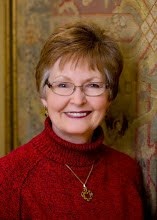
Layton Brooks is the main character in my book, Living Between the Ditches: When God Makes No Sense. Whether you've read the book or not, you may be interested in the general subject of fictional character development. Or not. Stick with me on this. If you're still reading the book (true for 9 out of 10 of you!), don't worry. I'm not going to give anything away. I really do want you to finish it and write me a good on-line review!
At the beginning of the book Layton is angry and frustrated. Those of us who have been in a serious relationship (or grew up in a family!) can relate to his feelings. Layton is angry with his ex-wife (not too surprising) but he's also angry with God. I think most of us can also relate to this predicament. We don't feel comfortable being angry with God, and we certainly don't want to tell Him that. Why be too confrontational with Someone who can zap you right off the planet!
Layton is a kind of Everyman. If I may be so bold, we're all a little self-centered, caught up in our own side of things, and out of touch with some of our feelings. In fact we may be uneasy about sharing feelings, period. We can identify with Layton's foibles without too much discomfort. These are normal human emotions.
Layton's view of God is also fairly common. At some point in our lives, most people feel God let them down. I know I did, and I share that in the book. Layton thinks he's at least as good as most anybody he knows, yet he's dealing with some serious stuff. Is a God who seems to have turned His back on you a good God? Is He a giver or a taker?
In my main character I needed someone who represented being in a ditch—or one side of a spiritual paradox—as a means of illustrating my analogy. Layton is a vehicle, as it were, for helping us visualize our own ditch-dwelling and then, finding our way out. Of course, we need God's help to do that.
To some degree developing a fictional character resembles watching a movie play out in the author's mind. Although I had a story line in mind, Layton grew in depth and character as the story unfolded. I didn't know I'd come to care for Layton so much, or share his struggles, feel some of his pain, and wish him well in the conquest of his demons. You see, I wasn't prepared to like Layton because he represented a side of myself I don't like very much.
Perhaps in the end I learned to accept myself more—warts and all. Hopefully, that will be true for you, as well.
In my next post I'll tell about Amy, Layton's ex-wife, who I wasn't prepared to like, as well.
Wednesday, July 29, 2009

Sunday, July 19, 2009
Merging Fiction and Nonfiction: A Busy Intersection
In my previous blog I described how the combination of fiction and nonfiction came about in my book Living Between the Ditches: When God Makes No Sense. Although the idea originated with my son, Mark, the idea took root and began to grow right before my very eyes.
I soon discovered problem one: the story line didn't keep up with the content, or—was it the content that didn't keep up with the story? Interspersing them proved more difficult than I would have imagined. For example, Layton's visit to the gift shop on p. 49 was added after the chapter was finished in order to break up the teaching into chewable bites. As it turned out, the bear Paychunts became part of the character development of Brianne, as witnessed by her dialogue on p. 138.
A second problem was transitions. How would I get from Layton's story into the biblical truth and back again? Would the reader feel that he or she had been pulled from one world into the other in jerking motions, or would the manuscript flow? My copy editor, Bethany, helped immensely. All she had to do was insert the words, say what?—or some similar comment to let me know I had lost her. Occasionally, she'd guess at the invisible link!
A third problem was distinguishing the dialogue of the story from the text of the content. By putting the dialogue in italics, the fictional portion looked different. Thinking up subtitles was harder than you might imagine because again, they had to help with the transition. A last minute idea was almost my undoing. By labeling each fictional portion with a day and hour, I attempted to help the reader keep track of the time line. Unfortunately, my due day to the printer came around before I had adequately proofed the text. Did any of you catch the error on page 49? It should read "Tuesday." (I've had it corrected for subsequent copies.)
The fact that the fiction and nonfiction came together at last into a cohesive whole (or am I being too optimistic?) is proof that God is still in the miracle-working business! I learned a lot in the process, and now I'm putting what I learned to good use in my second book. The main character is Parker, and like Layton, he's having some trouble wedging himself into to this book's paradox. Pray that he makes it!
Speaking of main characters, we'll talk about the development of Layton's character next.
Thursday, July 16, 2009
How A Non-Fiction Book Turned Fictional—Not Ficticious
A funny thing happened on my way to writing a nonfiction book of spiritual insights God had so graciously given me. I let my 30-something son Mark read the fledgling manuscript, and if you've read Living Between the Ditches: When God Makes No Sense, the dedication recounts his reaction.
"Mom," he said, "I think you've got something here." The rest of the story: he began to explain his generation to me. "If you want me to finish the book, you've got to peak my interest. I'm easily distracted, so even though I like your book, when something else grabs my attention, I probably won't come back to it. Then something else will divert me from that."
A little depressed by his prognosis, I asked,"So what can I do to keep you interested?"
Mark listed some options, including telling a story. He suggested, "Since you're talking about life as a journey, make up a story about a guy going on a cross-country trip." Then he left me to my machinations. I didn't know if I could write more than a short story, and Mark seemed to be implying one that would follow the book to its end. Hum—a novelette.
Boing! An idea began to form—I'll claim it was from above until someone can prove differently. A young man going on a trip from the east coast to—to—where? The town I knew best was the one I live in, so obviously he would be going to Nashville.
I knew he would be a young man because I wanted my nonfiction portion to be for both genders. From my experience as an editor I knew men would read about a man but not likely about a woman. I also knew he'd have to have a name unlike anyone I'd ever known personally. No sense in ruining a relationship.
So Layton Brooks was born. He was, of course, in between the ages of my two grown sons—a span of time I figured I knew something about. My writing instructors always told me to write about something I knew, and I thought I had a few clues about 30-something men.
But why would he be making this trip? It would have to involve the thesis of my book: that Christians walking the narrow road on the path to God's house would easily fall into a ditch on either side of the road—unless they learned to stay in the middle. Christians needed to live between the ditches.
Layton needed to be a ditch-hopper: someone who'd bounced from one ditch to another as I had done on my Christian pilgrimage. I figured Layton had stepped off the road for the same reasons many of us do, so I had a plot. All I needed was merely to make it an interesting story with believable characters and a tug or two at the old heartstrings. How hard could that be?
If you haven't read the book, I'm not going to give away any secrets. After all, you yet-to-purchase-my-book bloggers are my only hope for retirement. But I do want to share something about developing fictional characters.
In my next blogs I'll talk about Layton, then Amy and Brianne. At some point you'll learn who was my favorite character(s). I think you'll be surprised.
Tuesday, June 30, 2009
Signatures and Statues: A Distant Dream
I practiced several times the week before the big event. Should I sign my name with a hurried scrawl as though dozens of people were waiting on me? How about a print-cursive combo? That would make me seem sophisticated. Or, I could always sign my name as usual. Naw, too easy!
The day finally arrived. I nicked myself shaving twice—somewhat pointless since I was wearing a long billowy skirt. I got to my publisher's booth at least an hour in advance, nervously checked out the pens and copies of my book, and tried to look as though I did this a lot. The hour chimed. I picked up a copy of Living Between the Ditches: When God Makes No Sense, literally hot from the printer (books arrived the day before!), and poised my pen over the title page.
Only one problem remained. There were no takers. Not one customer swarmed me, hoping to be the first in line. I waited. I made pleasant small talk with those working the booth. I glanced at my husband, who was trying to drum up business as people walked past the booth in the large exhibit area. Finally, he had a couple cornered. Ah ... no one could resist his impassioned sales pitch. Then he brought them to me. I scribbled on a note pad to make sure the pen wouldn't smear.
"Betty, you remember my mentioning these folks from that mission trip I took last summer?" Sim was off and running, recalling their adventures in Newfoundland, of all places. I put the pen down.
I did sign a book for someone wandering by who took an interest in the lady sitting all by herself with a stack of books. A few others asked questions and claimed they'd be back later. They probably reappeared after my one hour in the sun disappeared.
Discouraged? Not a bit. I'm sure there will be other signings—or at least other opportunities for signings. The fact that I, Betty Hassler, had an autograph party was beyond my expectations. And I really have had great reviews from family and friends!
Recently I attended a musical on the life of Stephen Foster ("Oh, Susanna," "My Old Kentucky Home," "Camptown Races," etc.) who died at age 37 with only a few coins in his pocket. Stephen was born before the era of copyright laws, and although he wrote hundreds of songs, he sold very few of them. Now you can see his statue and visit buildings named after him, as well as read his biography in Wikipedia.
I wonder if I should put in my will that my statue should wear a long billowy skirt hiding two nicked knees? Just a thought ...
Keep living between the ditches,
Betty
Saturday, May 30, 2009
Bookcases and Windmills
As my husband passed the bookcase in our computer nook, I asked, "Do you see that middle shelf?
"Yes," he replied, with that what's-wrong-now look.
"It's sagging in the middle."
"Hum, you're right. What do you suppose caused it?"
My immediate thought was "cheap bookcase." I got it on sale at an office furniture store. It was a put-it-together-yourself type that I had worked on for two days before calling in a handyman to finish the job. The handyman was more expensive than the bookcase.
My second guess was that the books were too heavy for the particle board (well, it looked like wood and matched my computer desk--which came from the same store). The shelf contained two bound dissertations, three volumes of "Who's Who" and all my cookbooks (mostly unopened—ripe for Ebay).
When You're On Overload
Simply distributing the weight differently would probably have solved our problem. Except that every bookcase in our house (6 at last count) was full. Rearranging this bookshelf might entail a transfer to other, more substantial shelves in other rooms. Or, heaven forbid, giving away some precious books. There wasn't going to be a quick solution.
Then an analogy poofed into being: my overloaded mind. Not a simple solution, either.
I grew up with Glenn Campbell singing "Windmills of My Mind." The song made a lasting impression because I lived in west Texas where dust storms were more feared than tornadoes. In west Texas, if you found a windmill that wasn't whirring, it was broken. Even as a child, my mind whirred with ideas, dreams, goals, and all the stuff of a great imagination.
Almost a thousand miles from west Texas and with Glenn Campbell nearing retirement, my mind still whirs. Getting it to stop—or at least slow down—proves difficult. All those unwritten books, articles, letters to the editor, not to mention keeping up with Facebook; e-mail; LinkedIn; birthday, sympathy, and get well cards—minds, like bookshelves, can get overwhelmed, even those of the most dedicated workaholics.
Unloading the Overload
I'm staring at the sagging bookshelf. I'm thinking about what's left on my mental "to do" list. But I'm about to finish my blog for now. Strike one thing off the list! It's time for celebration!
Except that I need to spend an hour or so on my second book (the first one is at the printers), and time is wasting. Or is it?
To unload the overload I've got to unwind the windmill. It occurred to me that a windmill looks a lot like my bedroom ceiling fan. When it's blowing more than needed, I simply turn it down one or more speeds. Occasionally, I turn it off. All I need is a chord to pull.
Time is precious, but so is rest, reflection, and renewal. I'm pulling the chord to slow speed. Humm ... it's feeling good.
Wednesday, May 6, 2009
Birthing Books and Babies
Scarlett O'Hara's maid didn't know nothin' about birthing no babies! But I've learned a lot recently about the connection between birthing books and babies.
1. Books and babies are birthed in their own good time, regardless of due dates.
My manuscript was due to my publisher on May 1, 2009. On April 26 I had finished reviewing 11 of the 12 chapters I had received from my copy editor and prematurely breathed a sigh of relief. On April 27 I had intended to finish the last chapter and back matter and send the manuscript to my editor when I got home from work. My unborn grandchild was due April 29, and we had thought he would be late, according to the doctor. No problem, right? Wrong! At 2:30 p.m. that Monday I was in my office when my son Scott called to tell me his wife was in labor with their second child and could I please call his dad. We were to leave ASAP for Pensacola, FL.
So much for the best laid plans of mice and women. Although Nathan Andrew was born before we arrived, I was with him, his parents, and his sister on May 1—and chapter 12 was a distant memory. On May 5 the publisher received the book with my apologies.
Some things in life take their own sweet time. Others come unexpectedly. Books and babies have their own timetable, and it's best to let nature take its course.
2. Books and babies just pop out.
Did that come out of me? I look at my manuscript and feel amazed that these words emanated from some place deep within me that I didn't even know existed.
My 4-year-old granddaughter had asked her mom, "How is that baby in your tummy going to get out?" Becky, thinking quickly on her feet, said, "It will just pop out." Several times last week Sara remarked on how Mommy's baby just popped out. It seemed a reasonable explanation to her.
How appropriate, I thought. I incubated my book for longer than nine months, but eventually, the words just popped out. When those who read the book ask, "Where did those ideas come from?" I have the perfect answer. "They just popped out."
What's in you that needs to pop out? Let the words flow!
Friday, April 17, 2009
Writing Bug Aptly Named
Did you know that bed bugs are a national epidemic? So said the evening news last night. Thousands of dollars can be spent trying to eradicate them once they creep or are carried in to your home. They make red sores that itch constantly.
What do writing and bed bugs have in common? The bite. The itch. When the writing bug bites, you best tend to it because it won't go away. When I try to calculate how many hours I've sat at the computer thinking, then typing, then pressing delete—I've probably spent thousands of dollars in lost income trying to scratch that itch.
Scratching an itch satisfies only temporarily. Many nights as I head for bed I've sworn my computer will stay in sleep mode much longer than I will, only to find I'm right back here the next day pecking away.
Do you know of an exterminator for the writing bug?
Keep living between the ditches,
Betty
Subscribe to:
Posts (Atom)